Integrated Advocacy: Unleashing the potential of ungated customer advocacy
Gal Biran
-
Base AI
7
min read
Heads up. You're not as special as you used to be.
You've been selected to join our exclusive customer advocacy program!
Sound familiar? If you hold a corporate role, chances are increasing that you've received a message like this from a B2B vendor. While customer advocacy programs were formerly a rare and novel treat back in the pioneering days of programs such as Microsoft MVP (a revolutionary program when launched in 1993), they're no longer the singular opportunity they used to be. In fact the last known report on this topic done by IDC in 2017 says that 67% of B2B businesses have a customer advocacy program in place. Not to mention the heavy increase in Hail Mary customer engagement efforts due to long-lasting lock-downs.
Customer advocacy programs are becoming less of a unique selling point and more of an expectation for today's B2B buyers.
It's quite possible that teams across your organization are now competing for membership in your customer advocacy program, whether it be a customer advisory board, champions community, reference program, referral program, beta program or all of the above.
Which forces us to ask: once customer advocacy programs become so common as to be an expectation, how available will your most sought-after members be, as they are courted by multiple vendors to engage in a growing range of advocacy activities?
The data behind the saturation
As B2B advocacy programs proliferate, we can look at consumer loyalty programs to see what program overload looks like. According to Clarus Commerce, consumers belong to an average of 14.8 loyalty programs — but are active in only 6.7 of them, which results in 54% of loyalty memberships being inactive. Sound familiar?
Oh no! Does this mean my customer advocacy program will fail?
Of course not. If you've been in this practice for any length of time, you've certainly experienced the amazing results of a thoughtful and well-executed customer advocacy strategy: customer proof points accelerating sales cycles, customer-generated content helping your brand stand out, customer expertise enhancing adoption, and on it goes.
But what you also know — if you have any experience in customer programs — is that recruitment can be an ongoing quest, and don't even get me started on consistent engagement. Enticing membership and ongoing participation will become increasingly challenging and competitive as more organizations realize the benefits of advocacy programs and double down.
So, what's a customer marketer to do?
The practice of customer advocacy is evolving — making its way from back-office afterthought to golden goose of the executive team. But as the practice evolves, so too must our approach.
In this post, we focus on one prevalent aspect of typical customer advocacy programs: gating.
Almost always, customer advocacy programs require registration to unlock a distinct member experience. This makes sense — it's how we know who to target with relevant opportunities, how we build tribes, how we create exclusivity, and how we control the overall experience.
Typical aspects of gated advocacy programs include:
Hand-selected and invited participants
Gated engagement through program membership
Labeling members as advocates, champions, or similar terms
Program ownership by a singular department and limited cross-collaboration
A dedicated environment to log into
An "advocacy" journey unique to the program itself
Membership-driven programs should absolutely live on — they drive unique goodness for both the organization and the customer member. But as the number of B2B advocacy programs continues to swell, engaging customers with the aspects listed above is getting more competitive.
Get your pencils ready. Here comes the good stuff.
Advocacy can happen anywhere and live comfortably outside the confines of any membership-driven program. Even members who ignore your program invites, are already saturated with logins, or don't consider themselves "card-carrying advocates" can participate in meaningful ways on behalf of your brand.
It's time to think beyond typical customer advocacy programs by designing integrated advocacy.
Integrated advocacy happens when you map advocacy-related engagement to "opportune moments" in the customer journey, creating interactions designed to enhance the customer experience and give them access to ungated and unlabeled advocacy activities in the right place, at the right time.
Some aspects of integrated advocacy:
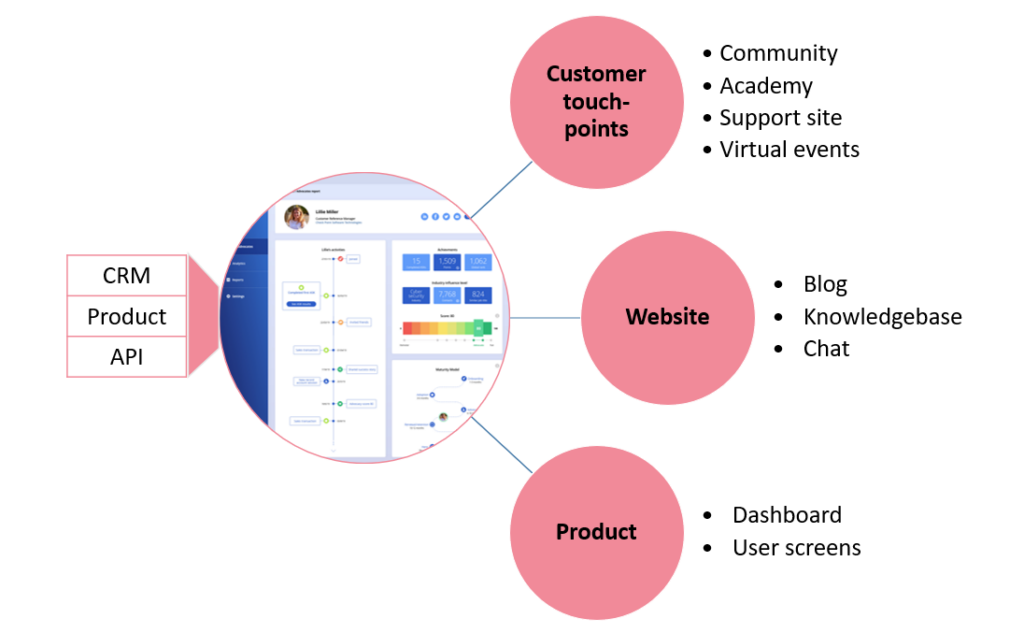
Meeting customers in the channels where they already engage, rather than relying on them coming to a designated point of engagement
Relationship-building and advocacy activities directly aligned to the existing customer journey for higher relevance and a more seamless experience
Ungated engagement opportunities outside the confines of formal program membership
Program-type activities without the need to ascribe to the "advocate" label
High levels of internal collaboration to design advocacy engagement around touchpoints owned by different departments
Where should I integrate advocacy in the customer journey?
"Opportune moments" are important points in the journey that have the potential to enhance or diminish the customer's overall perception of and loyalty to your brand. These are the instances where a customer's opinion about your brand is formed, sometimes permanently. They can be positive or negative, depending on whether you exceed or fall short of expectations.
Examples: a change in CSM, contract renewal, a change in service level, a bad support experience, a poor product feature rollout, or reaching a product adoption milestone. These moments are ripe for either building delight with your customer or engaging them in advocacy activities.
With an integrated advocacy strategy in place, the opportune moment, channel, and touchpoint are determined by an experience that can occur at any point in the customer journey, anywhere across the organization. Mapping engagement flows beyond a single automated response lets you infuse customer nurture and activation into any given milestone.
This approach increases the impact and outcomes of your advocacy program. Modern advocacy pioneers should consider how customer nurture and activation can be integrated throughout the customer journey, free of the confines of program membership. For a related perspective on why concentrating advocacy in a small, gated pool hurts you, see how to scale advocacy without burning out your best customers.
Sounds super smart, but how do I get started?
Start small. Integrated advocacy takes detailed engagement mapping, lots of cross-team collaboration, and often multiple technologies. Many customer advocacy professionals can get overwhelmed thinking about ungated engagement.
Pick two or three opportune moments in the customer journey that are the most accessible and have the potential for quick results.
Map how you can leverage that moment to build loyalty or activate customers by presenting the right opportunity to the right person at the right moment.
Meet with cross-departmental stakeholders to agree on the best way to collaborate and what success looks like.
Determine the necessary technologies that let you meet customers where they are and operationalize your engagement flows. The Base Control Center and Team Dashboards are built for exactly this.
Measure the impact of your integrated advocacy efforts and iterate as you go.
The future of B2B customer marketing and advocacy is bright. Think beyond the expected and traditional forms of customer advocacy program design to create a seamless experience for your customers that meets them where they are and unlocks the gates of opportunity — for your business and their careers. Ready to see what integrated advocacy looks like in your stack? Book a demo.
Frequently asked questions
What is integrated advocacy?
Integrated advocacy is the practice of mapping advocacy opportunities to moments in the customer journey — across channels, teams, and touchpoints — instead of confining advocacy to a gated program. It lets customers contribute proof, stories, and insight without signing up for a formal "advocate" identity.
How is integrated advocacy different from a gated advocacy program?
Gated programs require registration, label members as advocates, and operate inside a dedicated environment owned by one team. Integrated advocacy lives across the existing customer journey — email moments, in-product surveys, CSM touchpoints, review prompts, community conversations — and is orchestrated across multiple teams.
Does this mean I should shut down my gated advocacy program?
No. Gated programs still drive unique value, especially for top-tier champions who want community and exclusivity. Integrated advocacy complements gated programs by expanding the surface area where advocacy can happen — so you're not dependent on a small pool of registered members.
Where do I start with integrated advocacy?
Pick 2–3 high-leverage moments in the customer journey (renewal, adoption milestone, CSM change, support resolution). Design an ungated advocacy action for each. Align with the team that owns that moment (CS, product, support). Measure, iterate.
Key Takeaways
Advocacy programs have commoditized — 67% of B2B businesses already run one (IDC), so exclusivity is no longer the hook.
"Integrated advocacy" means every customer is a potential advocate through daily product and community moments, not a gated list of 50 champions.
56% of B2B buyers (71% enterprise) consult existing users before buying (TrustRadius), so the size and diversity of your advocate pool directly shapes win rates.
Gamification drives a 47% lift in engagement and 22% lift in loyalty (Snipp), which is why Base's Levels by Points replaces static tiers with continuous progression.
The modern advocacy engine pairs identity-matched asks with voice-of-customer data — not generic broadcast campaigns — to scale without burning out champions.
Frequently asked questions
No items found.
Give us a try, easy peasy.
Building and scaling your advocacy program is easy when you can manage campaigns, rewards, track, and report - all within one AI platform.